
CBSE Class 10 Board Exams: A Parent’s Complete Guide to Reducing Stress, Improving Results, and Supporting Your Child the Right Way
The CBSE Class 10 board exams are often described as a milestone. For many families, they quietly become a pressure cooker. Children feel watched, measured, and compared. Parents feel anxious, helpless, and unsure how to help without making things worse. Teachers feel responsible for results and, at times, overwhelmed by expectations.
This guide is written for parents who want clarity instead of panic and support instead of pressure.
Drawing on decades of classroom observation and parent interaction at Jawahar Vidyalaya Senior Secondary, one of the best CBSE School in Chennai, this article brings together what actually helps CBSE Class 10 students, not theories, not shortcuts, but practical, humane solutions that protect mental health while strengthening academic outcomes.
Why CBSE Class 10 Feels So Stressful Today?

CBSE Class 10 has not suddenly become harder. The syllabus is manageable. The evaluation is structured. The stress comes from meaning, not material.
For many students today:
Marks feel like identity
Ranks feel like social value
Failure feels permanent
This emotional weight begins early. Children hear conversations about “board importance” from primary classes. Comparisons start subtly. By Class 9, fear often replaces curiosity.
When exam season arrives, routine changes:
Teachers sound more serious
Parents become more watchful
Conversations revolve around marks
The message students receive is unspoken but loud: this exam defines you.
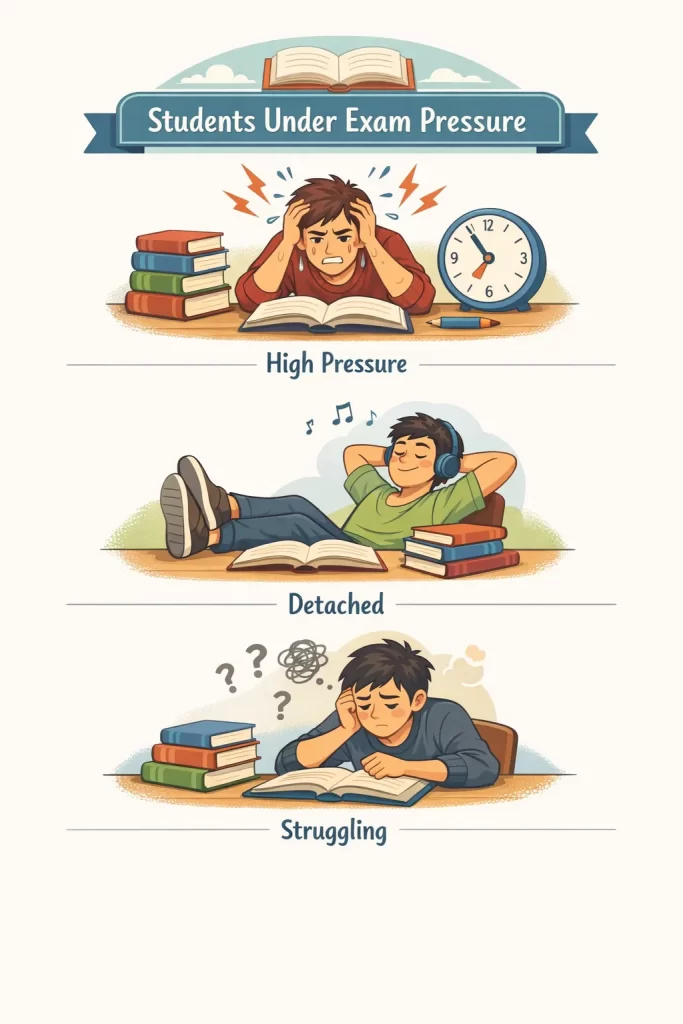
The Three Types of CBSE Class 10 Students Parents Commonly See
Over years of observation, most students fall into one of three broad patterns. Understanding which one your child resembles helps parents respond wisely.
1. The High-Scoring but Highly Pressured Student
These students usually perform well. They are disciplined, responsible, and motivated. Yet their fear is intense. They worry about slipping. A single low mark can feel like failure.
Common signs:
Anxiety before tests
Fear of disappointing parents
Over-studying and exhaustion
Risk: burnout, panic, loss of joy in learning.
2. The Carefree or Emotionally Detached Student
These students appear relaxed. Exams do not disturb them much. Sometimes parents wish their child “took things more seriously.”
Common signs:
minimal exam anxiety
inconsistent preparation
average performance
Risk: unrealized potential, lack of direction if guidance is absent.
3. The Hard-Working but Low-Scoring Student
This group suffers the most silently. They try. They attend classes. They study sincerely. Yet results do not reflect effort.
Common signs:
Frustration after results
Low confidence
Statements like “I’m trying but nothing works”
Risk: learned helplessness, emotional withdrawal.
None of these children are weak. They are responding to pressure in different ways.
What Most Parents Get Wrong About CBSE Class 10?
Parents act from love. But some well-intended actions create stress instead of support.
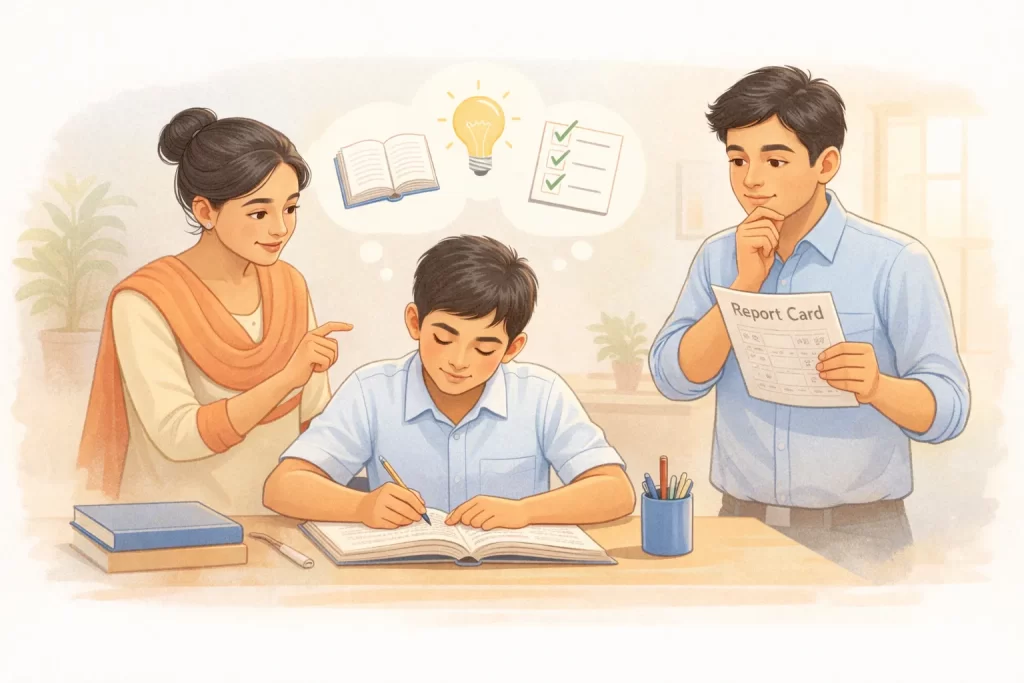
Myth 1: Pressure Improves Performance
Pressure may increase short-term output, but it reduces memory, focus, and emotional safety. Calm students recall better.
Myth 2: Marks Equal Intelligence
Marks measure performance under specific conditions. They do not measure creativity, leadership, resilience, or long-term success.
Myth 3: Tuition Is the Only Solution
Extra classes help only when targeted. Blindly adding tuition increases fatigue and confusion.
When these myths are questioned, space opens for healthier strategies.
How Parents Can Support Their Child During CBSE Class 10 Exams?
Support is not about control. It is about creating an environment where effort feels safe.
What Parents Should Do
- Ask about learning, not only scores
- Maintain a predictable daily routine
- Encourage regular sleep and meals
- Offer reassurance without dismissing feelings
Simple phrases help:
- “Do your best; we’re proud of your effort.”
- “Marks help us understand, not judge.”
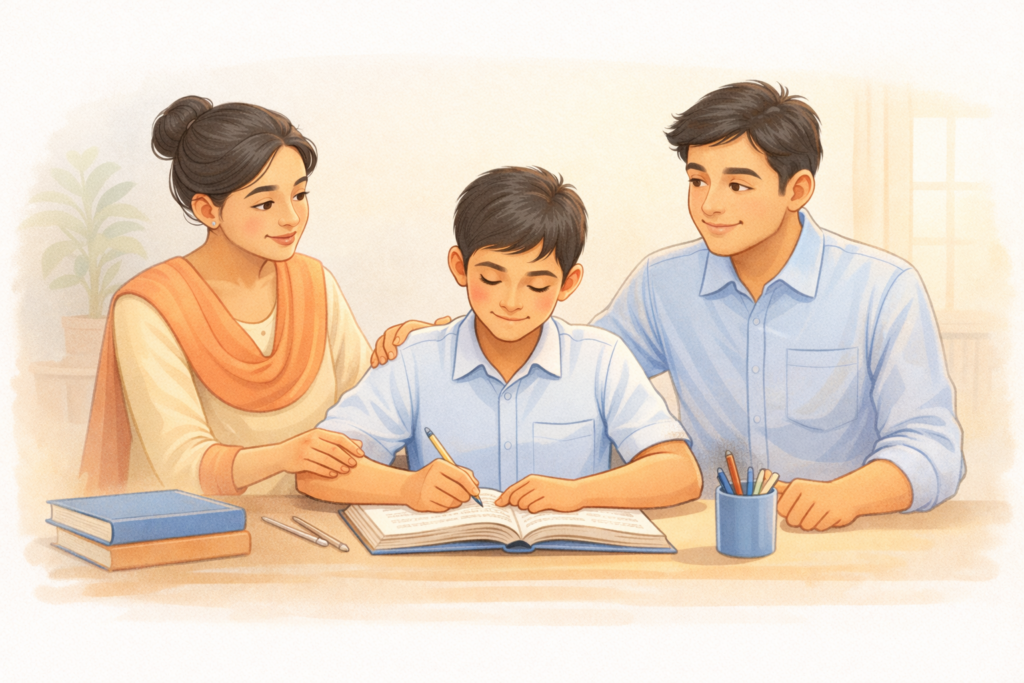
What Parents Should Avoid
- Comparisons with siblings or neighbours
- Threats about future consequences
- Frequent checking or surveillance
Children perform better when they feel trusted.
How Much Should a CBSE Class 10 Student Really Study?
There is no universal number when it comes to study hours. What truly matters is quality, structure, and consistency, not how long a student sits with books. One highly effective method that works well for CBSE Class 10 students is the 147 Rule, which helps students study deeply without mental exhaustion.
What Is the 147 Rule?
The 147 Rule means:
1 subject
4 focused study blocks
7 days a week
Instead of studying many subjects randomly every day, the student focuses on one subject per day, broken into four short, high-concentration sessions.
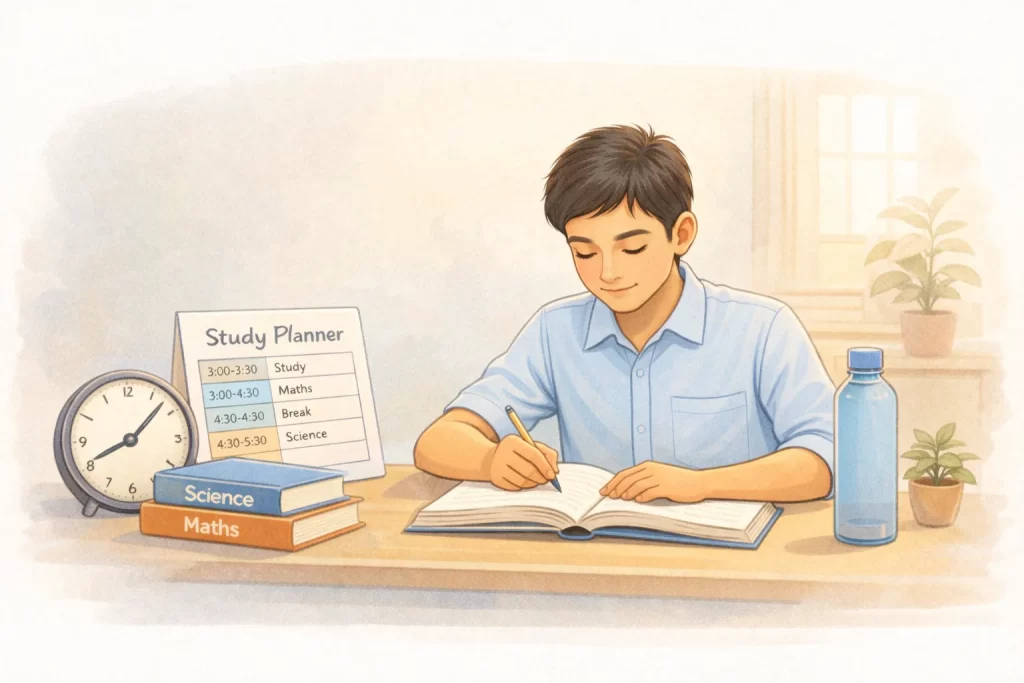
How the 147 Rule Works in Practice
Each study block lasts 45–60 minutes, followed by a short break.
A typical day looks like this:
Block 1: Learn or revise one concept
Block 2: Practice questions or numericals
Block 3: Review mistakes or weak areas
Block 4: Light revision or sample paper practicE
Between blocks, the student takes 10–15 minute breaks to reset mentally.
This structure:
Prevents fatigue
Improves memory retention
Reduces last-minute panic
What to Do If Your Child Is Trying but Still Scoring Low?
This situation tests parents the most. The instinct is to push harder. Often, the solution is to change method, not increase pressure.
Helpful steps:
- Identify specific gaps, not global weakness
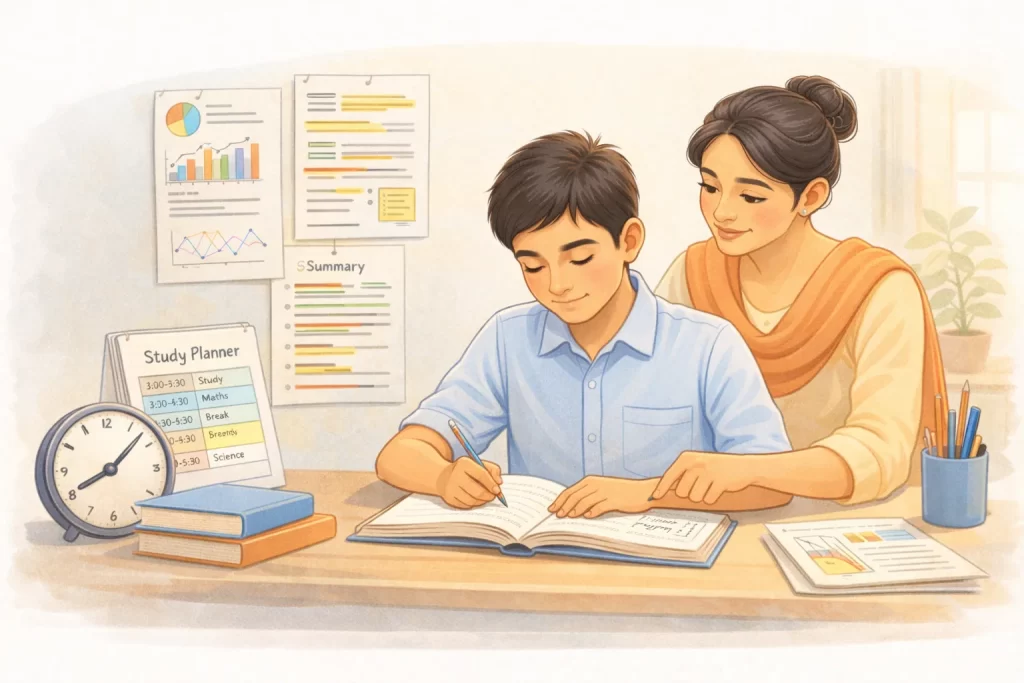
- Adjust study techniques (visual aids, summaries, practice tests)
- Set small, achievable targets
- Celebrate improvement, even if marks rise slowly
Most importantly, reassure your child that effort is noticed and valued.
Reducing Exam Fear: What Actually Works
Every school must begin this training from kindergarten. When children are guided at an early stage to face small challenges with encouragement and structure, they gradually learn how to handle pressure in a healthy way. Emotional resilience is not built overnight; it starts in kindergarten through positive reinforcement, structured routines, and supportive classroom environments.
Practical tools:
- Short breathing exercises before study
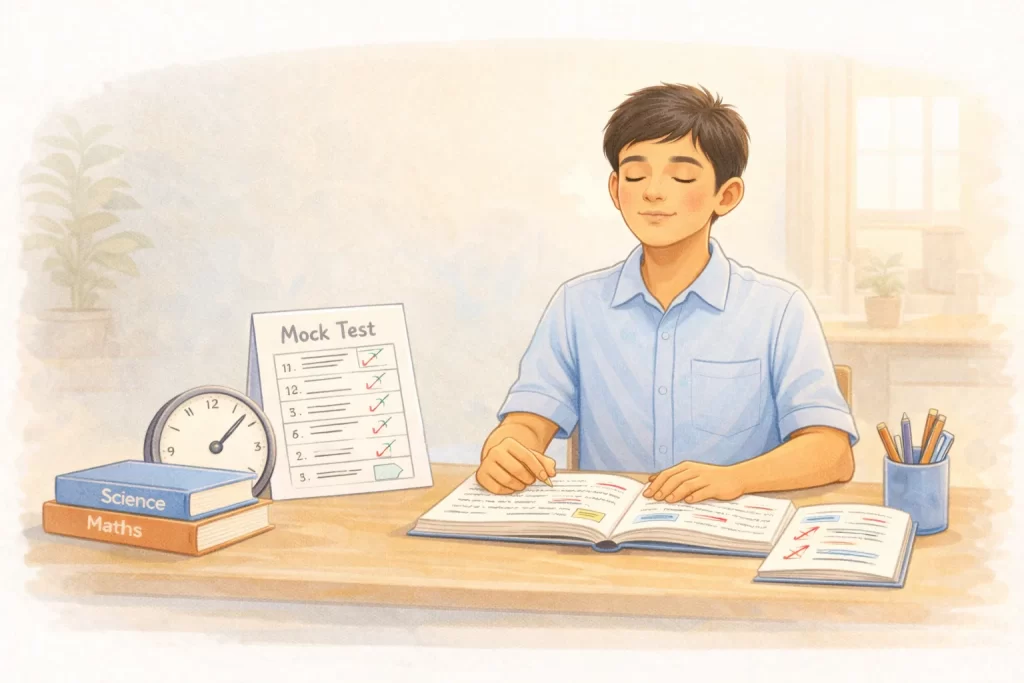
- Mock exams to reduce novelty fear
- Teaching children that mistakes guide learning
When fear reduces, performance often improves naturally.
The Role of Schools in Supporting CBSE Class 10 Students
A school’s culture significantly affects exam stress.
Healthy practices include:
- No public comparison of marks
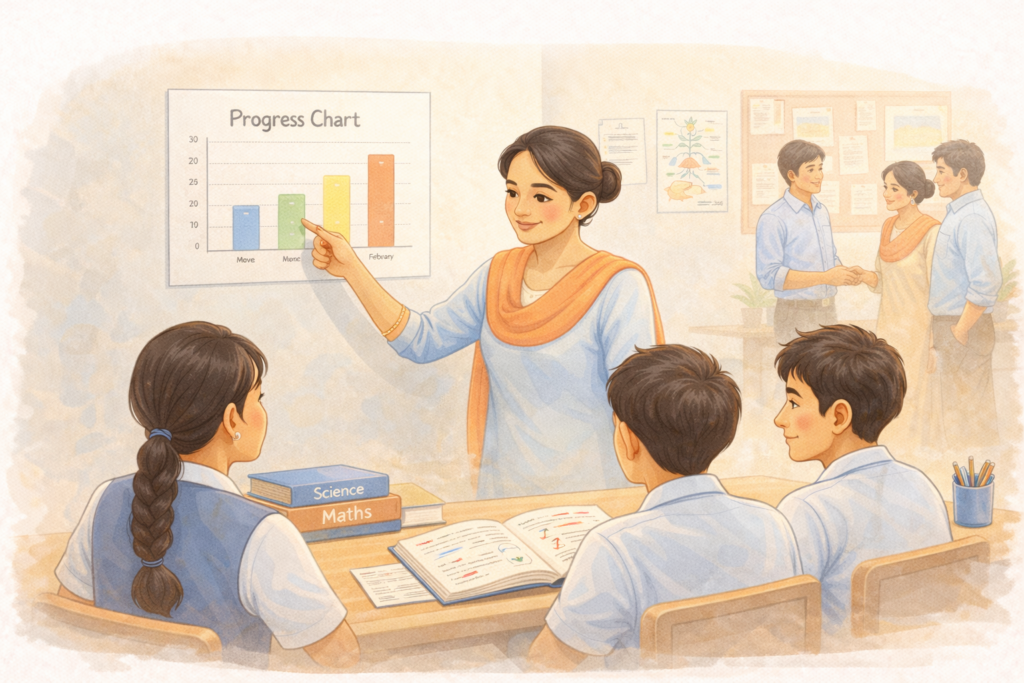
- Tracking personal progress instead of rank lists
- Clear communication with parents
- Emotional check-ins during exam season
Responsible schools treat exams as milestones, not verdicts.
Frequently Asked Questions
1. What is the minimum mark required to pass CBSE Class 10?
A student must score at least 33% in each subject, including theory and internal assessment combined, to pass Class 10 under CBSE rules.
2. If my child fails in one subject, will they fail the whole year?
No. CBSE allows students to appear for compartment examinations if they fail in one subject, giving them another chance without repeating the entire year.
3. Are NCERT textbooks enough to score well in CBSE Class 10?
Yes. NCERT books are the base and most important resource. Reference books can be used only for additional practice after NCERT concepts are clear.
4. How important are internal assessment marks in Class 10?
Internal assessments (periodic tests, notebooks, projects, practicals) count toward final marks, so consistent school performance is important.
5. How many hours should a CBSE Class 10 student study daily?
There is no fixed number. Most students do well with 4–6 focused hours daily, with proper breaks and revision, rather than long stressful study sessions.
6. Is tuition or coaching compulsory for CBSE Class 10?
No. Tuition is helpful only if a student has specific learning gaps. Many students succeed with school teaching and disciplined self-study.
8. What are the top 10 CBSE schools in Chennai?
9. Can CBSE Class 10 students reappear to improve marks?
Yes. CBSE allows improvement examinations as per the rules announced for that academic year. Parents should check the latest CBSE circular.
10. What happens if my child falls sick during board exams?
Parents must inform the school immediately and submit a medical certificate. CBSE has procedures for genuine medical cases.
11. What documents are needed after CBSE Class 10 results?
Students receive a marksheet, passing certificate, and migration certificate through the school or DigiLocker.
12. How can parents check if internal marks are fair?
Parents can request clarity from the school regarding internal assessment criteria and performance feedback during parent-teacher meetings.
13. Are online study apps reliable for CBSE Class 10?
Some are helpful, but parents should avoid platforms promising guaranteed marks or leaked papers. Official CBSE resources are safest.
14. What is the CBSE Class 10 board exam date for 2026?
CBSE has not yet officially announced the Class 10 board exam dates for 2026. Based on previous years, exams are expected to begin in February 2026. Parents should follow CBSE’s official website and school circulars for confirmed dates.
15. CBSE 10th exam timetable 2026 PDF download
16. What is the duration of each CBSE Class 10 exam?
Most Class 10 board exams are 3 hours long, along with an additional 15 minutes reading time before the exam starts.
17. How are theory and practical marks divided in CBSE Class 10?
For most subjects:
Theory: 80 marks
Internal/Practical: 20 marks
Some subjects may vary slightly based on syllabus.
18. Does CBSE give grace marks in Class 10?
CBSE may award grace marks in borderline cases to help students pass, at the board’s discretion.
19. What is the attendance requirement for CBSE Class 10 exams?
Students must generally have 75% attendance unless medically exempted and approved by the school and CBSE.
20. What if a student reaches the exam centre late?
Parents must inform the school immediately and submit a medical certificate. CBSE provides procedures for genuine cases.