
How CBSE Internal Assessments Work in Chennai Schools
Parents in Chennai often focus heavily on board exam marks. However, many do not fully understand how CBSE internal assessment works and how these internal marks influence final results. In recent years, internal evaluation has become more structured, more documented, and more significant in shaping student outcomes.
Under the CBSE marking scheme, internal assessment is not optional or informal. It is a defined, monitored, and recorded component of evaluation, especially in Classes 9 and 10. While the framework is national, its implementation varies slightly in practice across CBSE schools in Chennai due to academic culture, competitive pressure, and institutional systems.
This guide explains how internal assessments are structured, how Chennai schools implement them, and what parents must realistically understand.
Understanding CBSE Internal Assessment Structure
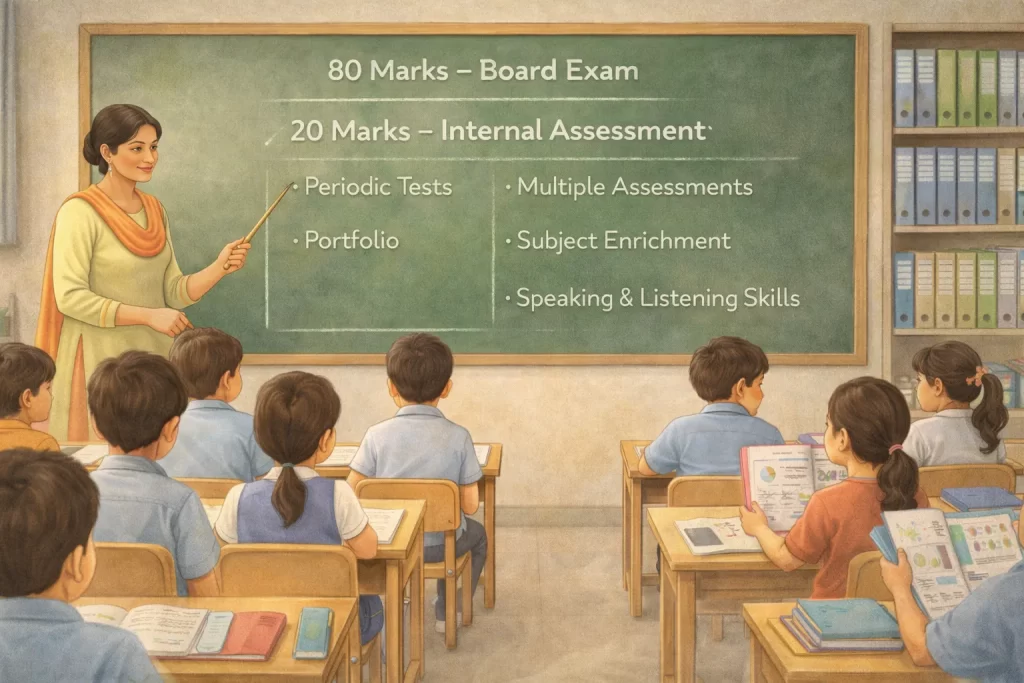
CBSE designs a standardized internal evaluation system across India. The structure remains the same whether a school operates in Chennai, Delhi, or Mumbai.
For Classes 9 and 10, most academic subjects carry:
- 80 marks – Board Examination
- 20 marks – Internal Assessment
These 20 internal marks are distributed across specific components:
- Periodic Tests
- Multiple Assessments
- Portfolio / Notebook Submission
- Subject Enrichment Activities
- Speaking & Listening Skills (for languages)
Schools must follow CBSE guidelines while maintaining documentation for audit and inspection.
Why Internal Assessment Matters in Chennai
Chennai has a strong competitive academic environment. Many students prepare simultaneously for:
- NEET
- JEE
- CUET
- Olympiads
Because of this culture, internal marks play an important role. In close board results, these 20 marks can influence overall grade boundaries.
In several CBSE schools in Chennai, academic coordinators closely track internal performance because:
- Class 9 performance influences Class 10 readiness
- Continuous assessment identifies weak areas early
- Competitive exam preparation overlaps with school evaluation
Internal assessment is not just mark allocation. It is performance monitoring.
Component 1: Periodic Tests
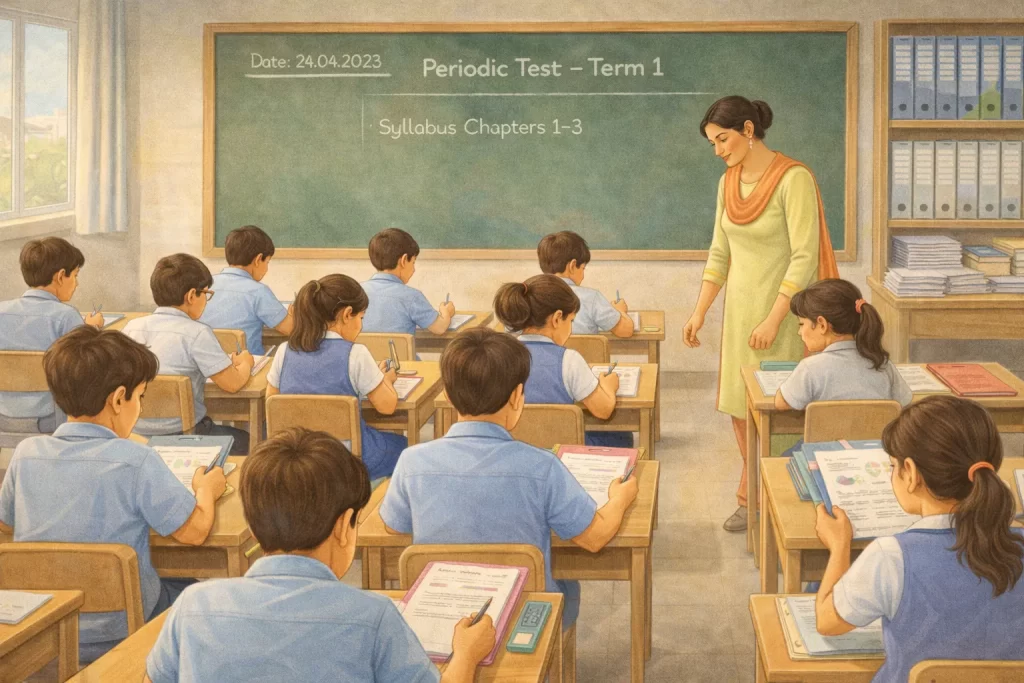
What Are Periodic Tests?
Periodic Tests are written examinations conducted during the academic year. Schools typically conduct 2–3 such tests.
Under CBSE guidelines:
- Best average performance is often considered
- Syllabus portions are clearly defined
- Written format is followed
How Chennai Schools Implement This
In Chennai, most CBSE schools align periodic tests with:
- Monthly academic plans
- Term-based syllabus division
- Pre-board preparation strategy
Many schools integrate periodic test patterns similar to board paper formats to gradually train students.
Parents should understand that periodic tests are structured, recorded, and internally moderated.
Component 2: Multiple Assessments

Multiple assessments evaluate learning beyond written exams.
These may include:
- Class participation
- Oral responses
- Group tasks
- Concept-based activities
- Short quizzes
In Chennai schools, teachers often maintain observational registers. These records form part of internal documentation.
Unlike tuition tests, these assessments measure consistency, not memory.
Component 3: Portfolio and Notebook Submission
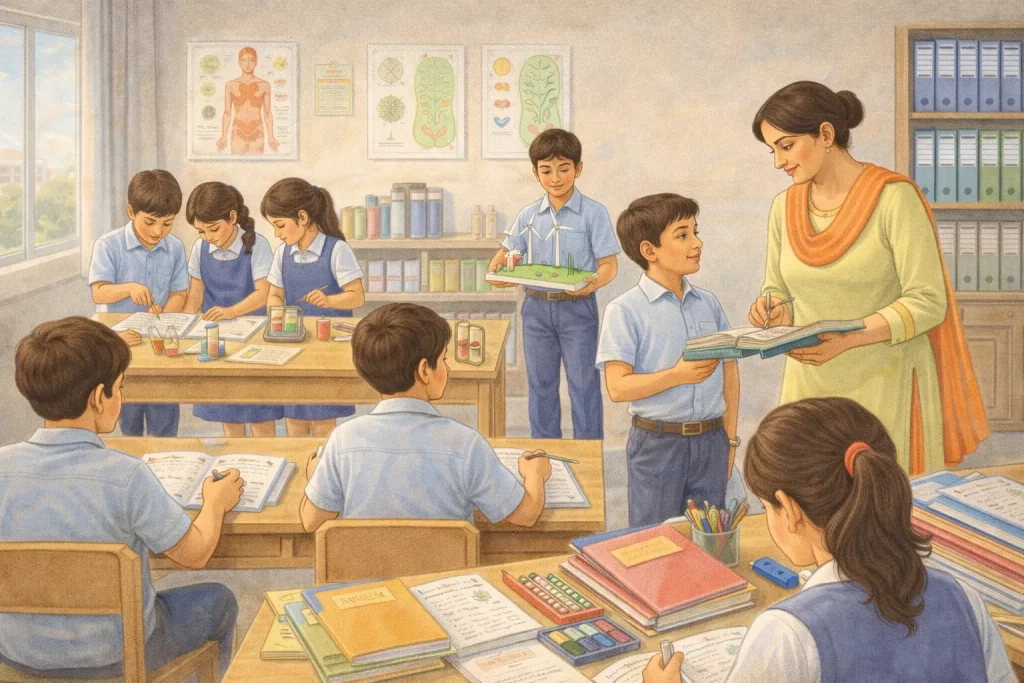
CBSE expects students to maintain proper notebooks and subject records.
Portfolio evaluation may include:
- Assignment completion
- Project submissions
- Classwork quality
- Timely homework
- Improvement tracking
In many CBSE schools in Chennai, notebook reviews happen term-wise. Teachers award marks based on:
- Completeness
- Accuracy
- Neatness
- Reflection of learning progress
This system encourages regular study habits rather than last-minute preparation.
Component 4: Subject Enrichment Activities

Subject enrichment varies by subject.
For example:
- Science practicals
- Lab activities
- Math activities
- Art integration
- Model preparation
- Experiments
Chennai schools usually maintain lab records carefully because CBSE inspections require documentation.
Parents often misunderstand enrichment activities as “projects for marks.” In reality, they evaluate application-based learning.
Component 5: Speaking and Listening Skills
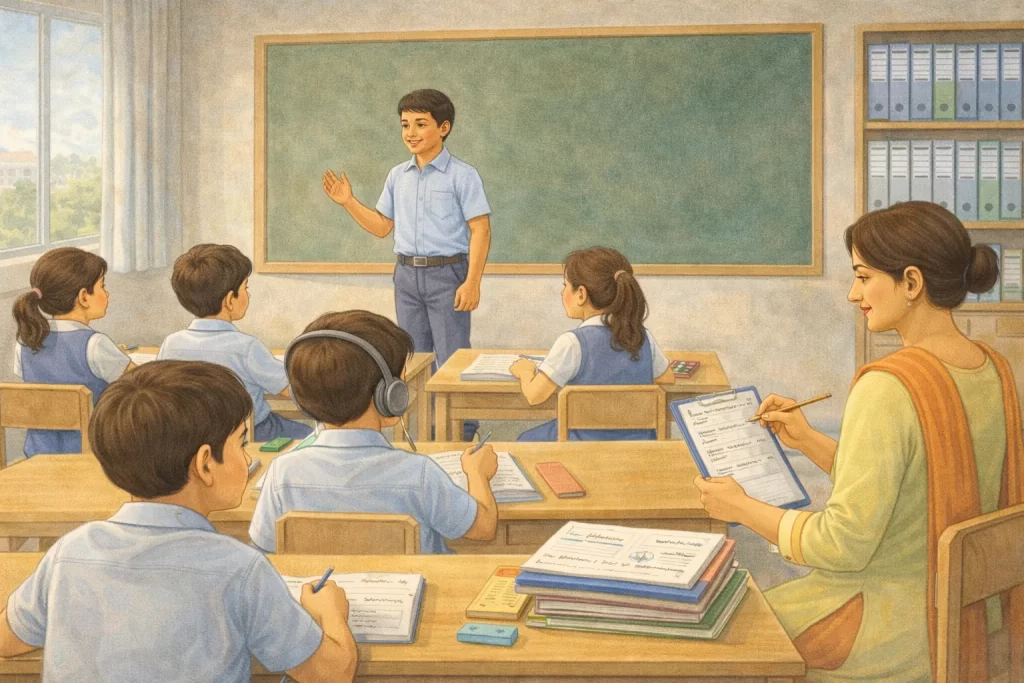
For English and other languages, speaking and listening activities are compulsory.
Teachers assess:
- Pronunciation
- Communication clarity
- Listening comprehension
- Response ability
In urban Chennai schools, communication skills receive added focus due to competitive exam interviews and higher education preparation.
How Internal Marks Are Calculated in Class 9 and 10
A common question parents ask:
How are internal marks in CBSE Class 10 calculated?
The 20 marks are distributed across components. Schools calculate:
- Average periodic test score
- Assessment activity score
- Portfolio evaluation score
- Enrichment marks
Teachers consolidate marks and submit them to CBSE portals before board results.
CBSE may moderate or verify marks if required.
Do Internal Marks Affect Board Results?
Yes.
For example:
If a student scores 70/80 in board exam and 18/20 in internal assessment, final result becomes:
88/100.
This affects:
- Overall percentage
- Grade
- Cut-off eligibility
Internal marks directly influence final performance.
Attendance and Internal Assessment
Many Chennai parents ask whether attendance affects internal marks.
CBSE mandates minimum attendance (usually 75%). While attendance itself is not directly graded, participation influences:
- Multiple assessment
- Portfolio completeness
- Classroom performance
Regular attendance improves internal scoring consistency.
Moderation and Transparency
Schools must maintain:
- Assessment registers
- Mark entry records
- Digital documentation
- Principal verification
CBSE may request internal mark evidence.
In reputed CBSE schools in Chennai, academic heads conduct internal moderation meetings to ensure:
- No favoritism
- Consistent marking standards
- Fair distribution
Transparency builds credibility.
Teacher Evaluation and Accountability
Internal assessment requires teacher responsibility.
Teachers undergo:
- Subject training
- Assessment standardization
- Rubric-based grading methods
Senior coordinators review mark patterns to identify discrepancies.
This reduces bias and ensures alignment with CBSE marking scheme.
Parent Communication Systems
Chennai schools typically provide:
- Term report cards
- PTM discussions
- Academic review meetings
- Digital parent portals
Parents can monitor internal performance regularly instead of waiting for board results.
Pre-Board Culture in Chennai
Chennai has strong pre-board culture in Class 10.
Though pre-boards are separate from internal assessment, they influence:
- Academic discipline
- Exam readiness
- Remedial planning
Schools use internal assessment performance to identify students needing extra support before pre-boards.
Tuition Integration and Internal Marks
Many Chennai students attend tuition for competitive exams.
However, tuition marks do not affect internal assessment.
Teachers assess only classroom performance, assignments, and official periodic tests.
Parents must ensure school assignments remain a priority.
Migration and Transfer Students
CBSE internal assessment framework allows flexibility for transfer students.
When students move between CBSE schools in Chennai:
- Previous internal records are shared
- New school adjusts assessment mapping
- Academic continuity is maintained
This benefits families relocating within Chennai.
Early Intervention System
Internal assessment allows early identification of:
- Concept gaps
- Weak writing skills
- Low participation
- Attendance issues
Academic heads design remedial programs accordingly.
This system prevents last-minute board panic.
Urban Academic Pressure and Balanced Assessment
Chennai’s competitive academic culture sometimes increases stress.
Internal assessment spreads evaluation across the year. This reduces dependence on one final exam.
Continuous evaluation promotes consistency over memorization.
Frequently Asked Questions
1. What is the minimum mark required to pass CBSE Class 10?
A student must score at least 33% in each subject, including theory and internal assessment combined, to pass Class 10 under CBSE rules.
2. If my child fails in one subject, will they fail the whole year?
No. CBSE allows students to appear for compartment examinations if they fail in one subject, giving them another chance without repeating the entire year.
3. Are NCERT textbooks enough to score well in CBSE Class 10?
Yes. NCERT books are the base and most important resource. Reference books can be used only for additional practice after NCERT concepts are clear.
4. How important are internal assessment marks in Class 10?
Internal assessments (periodic tests, notebooks, projects, practicals) count toward final marks, so consistent school performance is important.
5. How many hours should a CBSE Class 10 student study daily?
There is no fixed number. Most students do well with 4–6 focused hours daily, with proper breaks and revision, rather than long stressful study sessions.
6. Is tuition or coaching compulsory for CBSE Class 10?
No. Tuition is helpful only if a student has specific learning gaps. Many students succeed with school teaching and disciplined self-study.
8. What are the top 10 CBSE schools in Chennai?
9. Can CBSE Class 10 students reappear to improve marks?
Yes. CBSE allows improvement examinations as per the rules announced for that academic year. Parents should check the latest CBSE circular.
10. What happens if my child falls sick during board exams?
Parents must inform the school immediately and submit a medical certificate. CBSE has procedures for genuine medical cases.
11. What documents are needed after CBSE Class 10 results?
Students receive a marksheet, passing certificate, and migration certificate through the school or DigiLocker.
12. How can parents check if internal marks are fair?
Parents can request clarity from the school regarding internal assessment criteria and performance feedback during parent-teacher meetings.
13. Are online study apps reliable for CBSE Class 10?
Some are helpful, but parents should avoid platforms promising guaranteed marks or leaked papers. Official CBSE resources are safest.
14. What is the CBSE Class 10 board exam date for 2026?
CBSE has not yet officially announced the Class 10 board exam dates for 2026. Based on previous years, exams are expected to begin in February 2026. Parents should follow CBSE’s official website and school circulars for confirmed dates.
15. CBSE 10th exam timetable 2026 PDF download
16. What is the duration of each CBSE Class 10 exam?
Most CBSE Class 10 board exams are 3 hours long, along with an additional 15 minutes reading time before the exam starts.
17. How are theory and practical marks divided in CBSE Class 10?
For most subjects:
Theory: 80 marks
Internal/Practical: 20 marks
Some subjects may vary slightly based on syllabus.
18. Does CBSE give grace marks in Class 10?
CBSE may award grace marks in borderline cases to help students pass, at the board’s discretion.
19. What is the attendance requirement for CBSE Class 10 exams?
Students must generally have 75% attendance unless medically exempted and approved by the school and CBSE.
20. What if a student reaches the exam centre late?
Parents must inform the school immediately and submit a medical certificate. CBSE provides procedures for genuine cases.