
Best CBSE School in Saligramam, Jawahar Global Academy - Guidance with Legacy
Choosing the right school in a growing urban locality like Saligramam requires more than attractive infrastructure or marketing language. Parents today evaluate safety, academic systems, teacher quality, structured assessments, and long-term educational continuity. Jawahar Global Academy, the Saligramam campus of Jawahar Vidyalaya, has been established to meet these expectations with institutional clarity and structured CBSE education from Kindergarten to Class 12.
With a 3-acre planned campus and a legacy that began in 1966 at Ashok Nagar, the Saligramam branch combines established academic systems with modern infrastructure designed for contemporary learning needs. For families comparing institutions across the city, including those listed among the top 10 CBSE schools, structured systems and credibility often become deciding factors.
A Legacy Extended to Saligramam
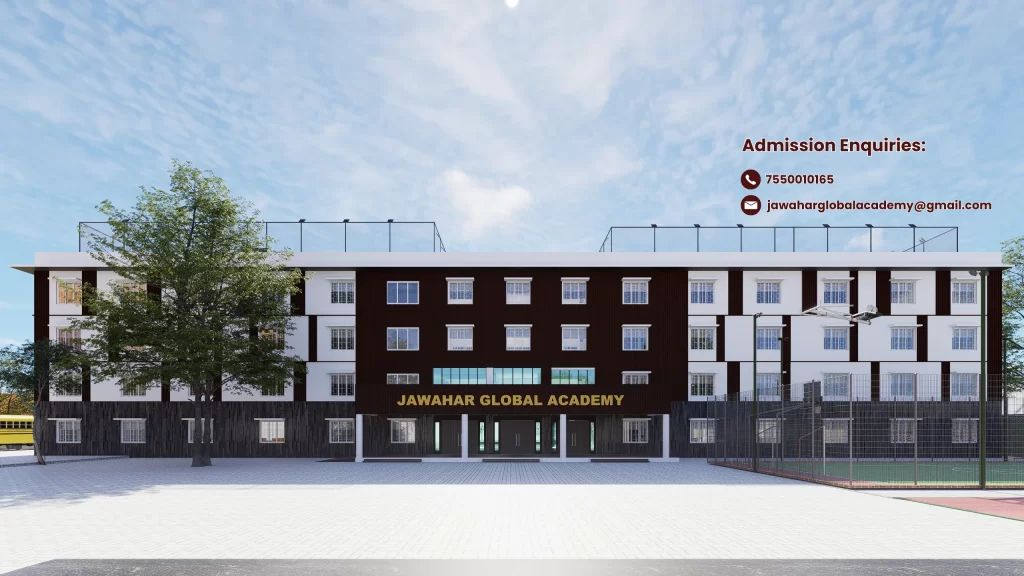
Jawahar Global Academy is not a new standalone experiment. It is an extension of a school ecosystem that has functioned for decades with consistent academic discipline and structured CBSE implementation.
Parents searching for the best CBSE school in Saligramam often compare new institutions with established names. What differentiates Jawahar Global Academy is institutional continuity. The systems implemented here are built on long-standing academic frameworks refined over years at the Ashok Nagar campus.
This continuity ensures:
- Structured curriculum mapping
- Experienced academic oversight
- Standardized internal assessment processes
- Clear board exam preparation systems
The Saligramam campus is not built on branding; it is built on operational replication of proven academic systems.
Strategic Location Advantage in Saligramam
Saligramam has evolved into a residential hub connected to Vadapalani, Virugambakkam, KK Nagar, and Kodambakkam. Many working professionals prefer schooling options within accessible distance to reduce commute time for children.
The campus location offers:
- Easy connectivity to major arterial roads
- Safe residential surroundings
- Reduced travel fatigue for students
- Proximity to growing urban communities
For parents evaluating multiple schools in this zone, location combined with structured academics often influences final decisions.
Campus Infrastructure Designed for Functionality
Saligramam has evolved into a residential hub connected to Vadapalani, Virugambakkam, KK Nagar, and Kodambakkam. Many working professionals prefer schooling options within accessible distance to reduce commute time for children.
The campus location offers:
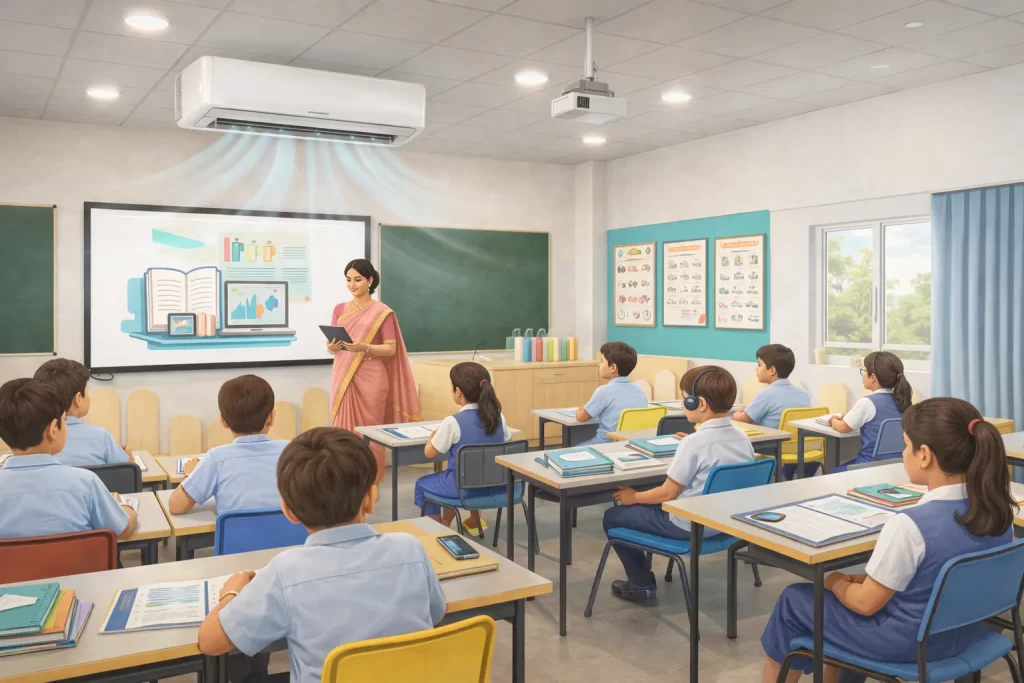
AC Class Rooms

Chemistry Lab

Physics Lab

Biology Lab
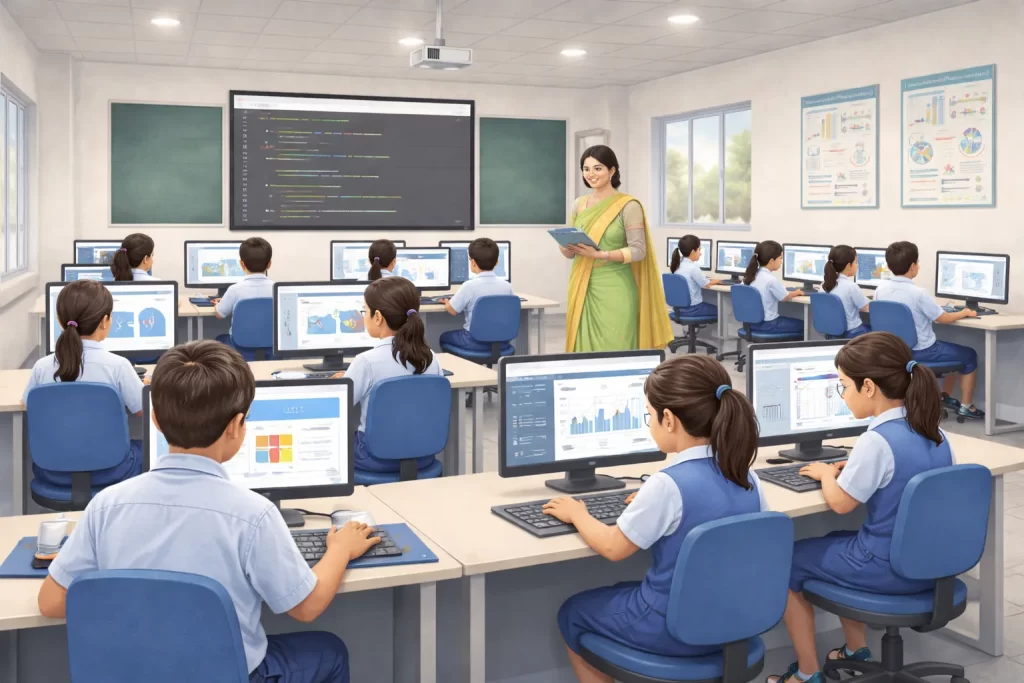
Computer Lab
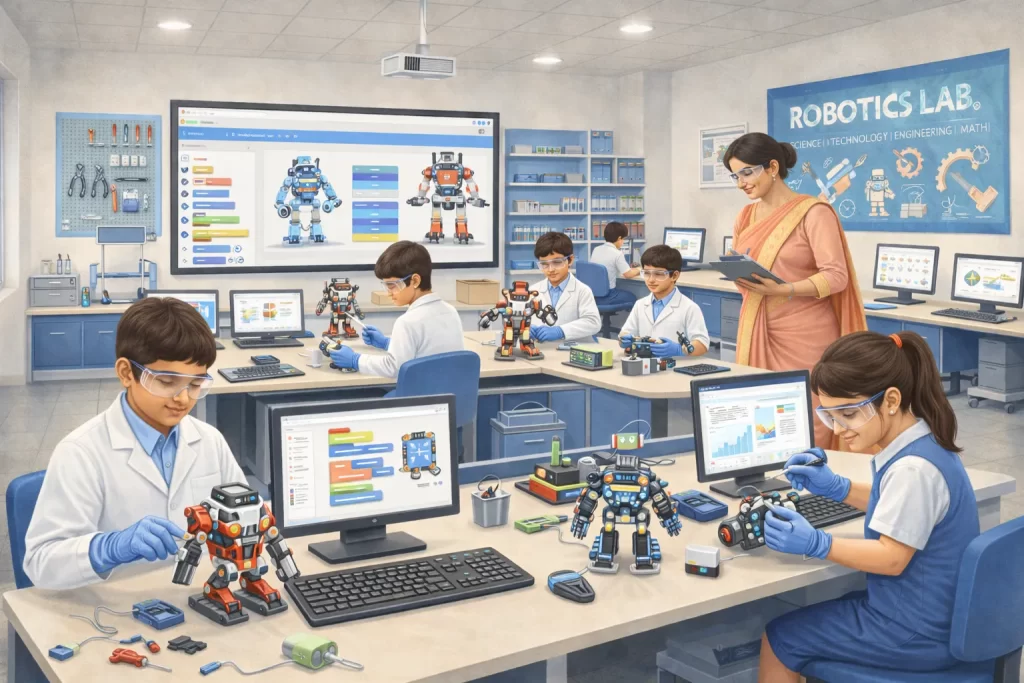
Robotic Lab - STEM Engagement
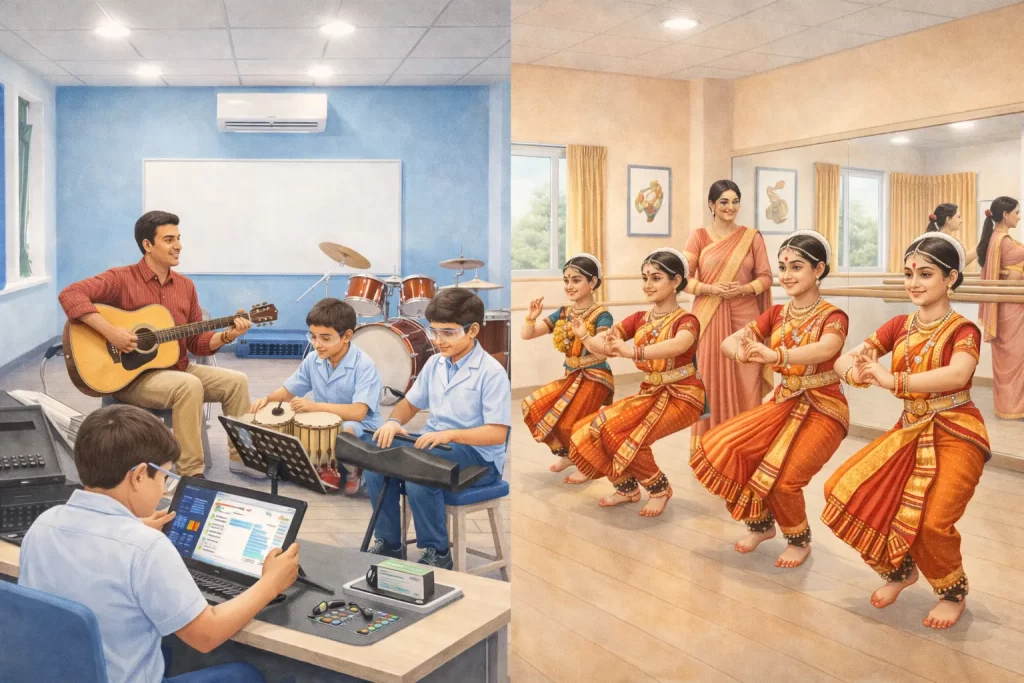
Music and Dance Studios
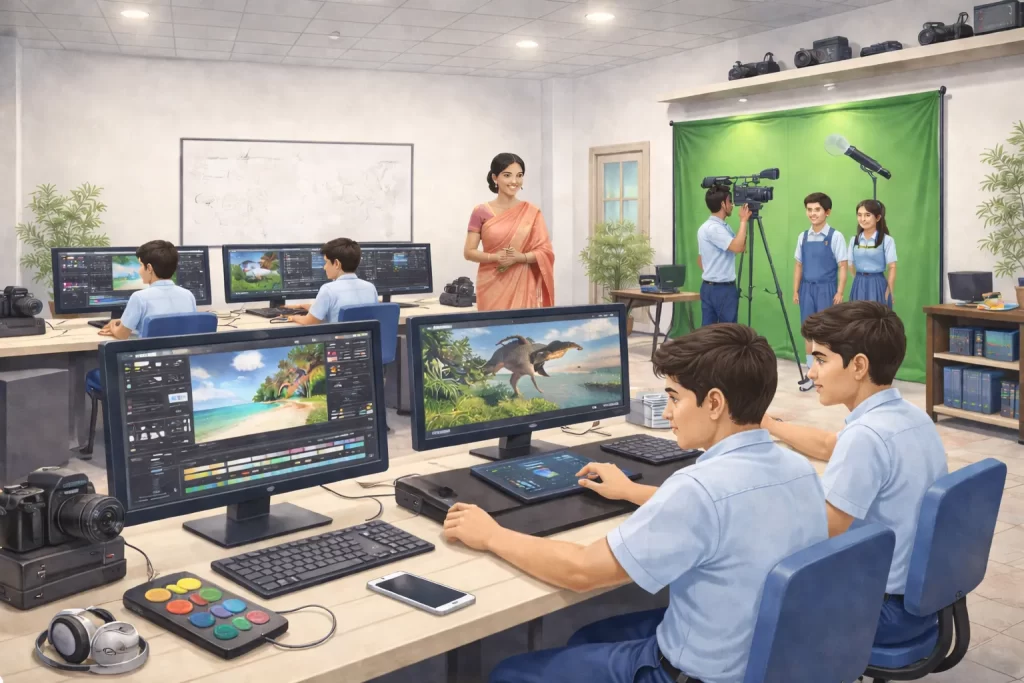
Composite Lab
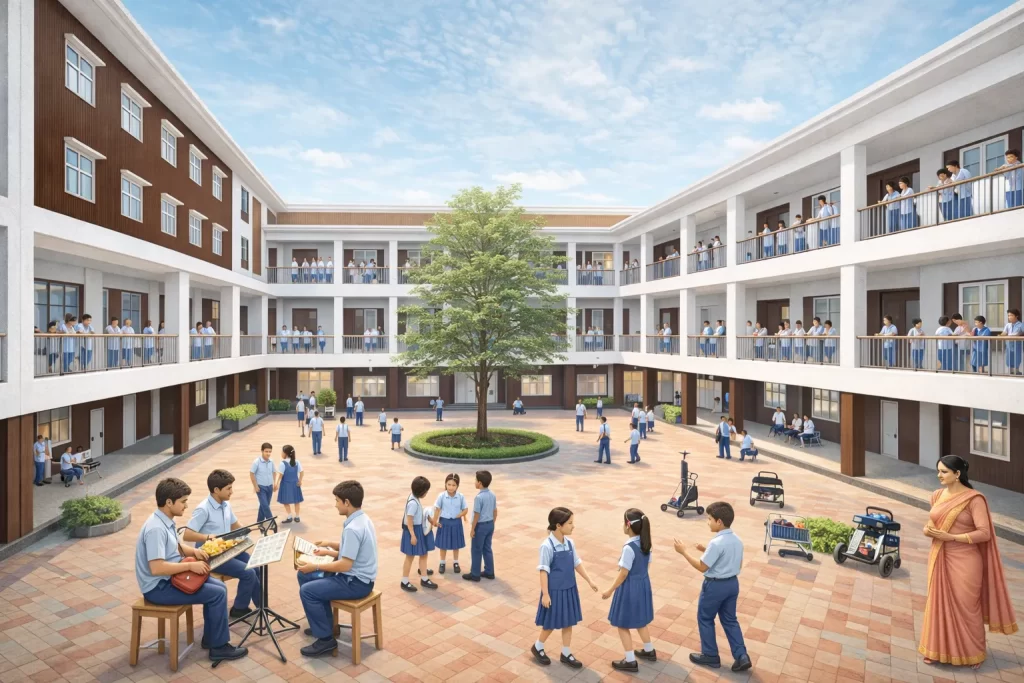
Safe Internal Courtyard
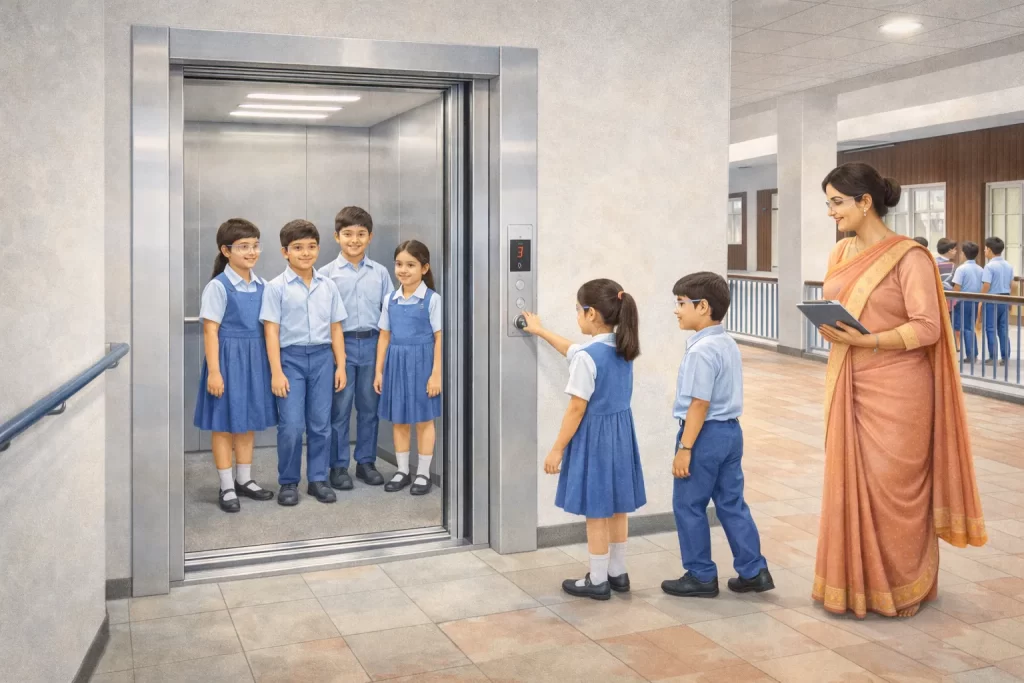
Lift Accessibility
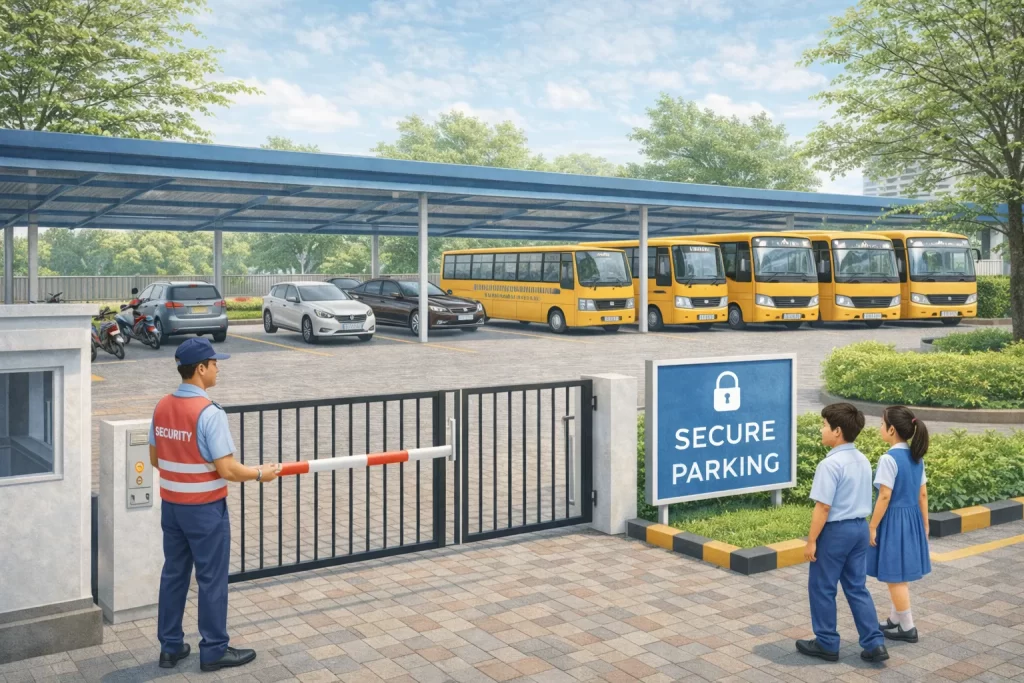
Secure Parking Facilities
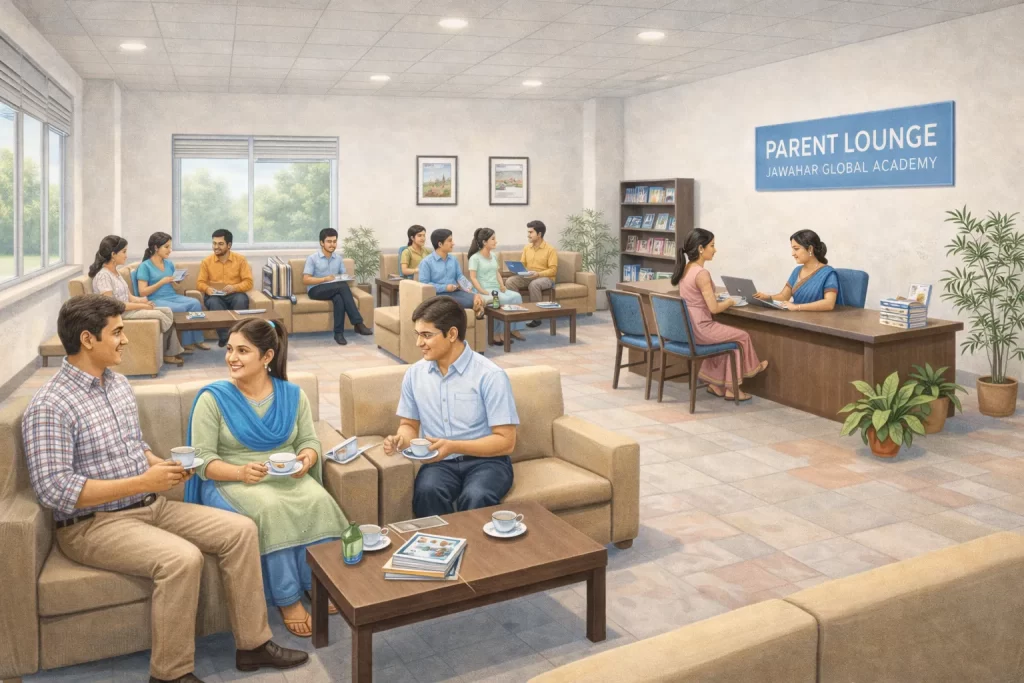
Dedicated Parent Lounge
Sports Infrastructure Includes

Basketball court
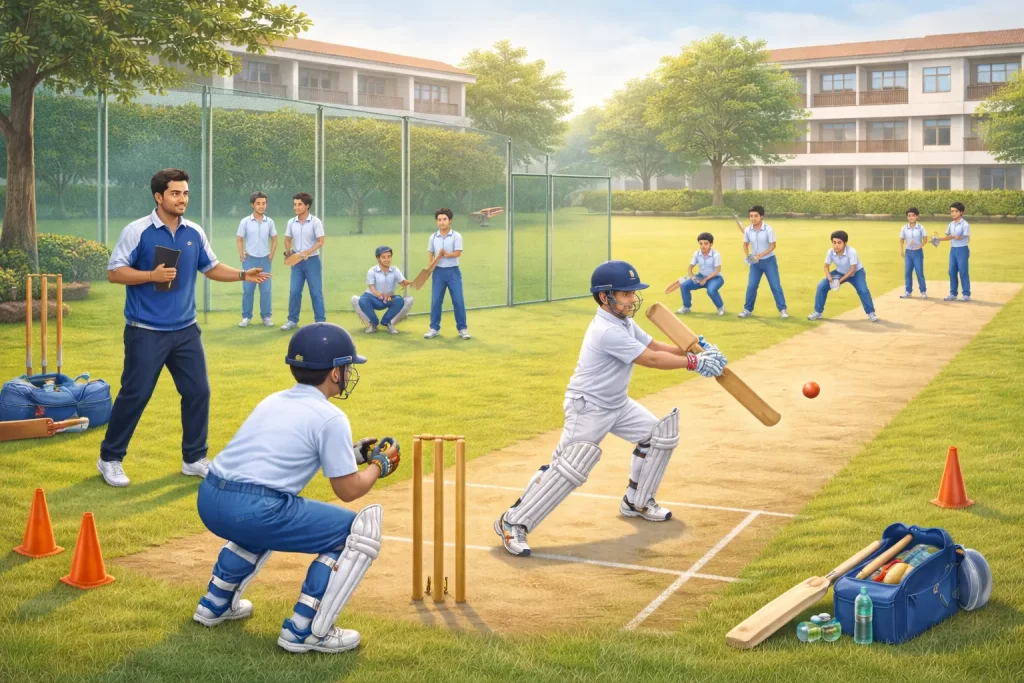
Cricket pitch

Tennis court

Pickleball court
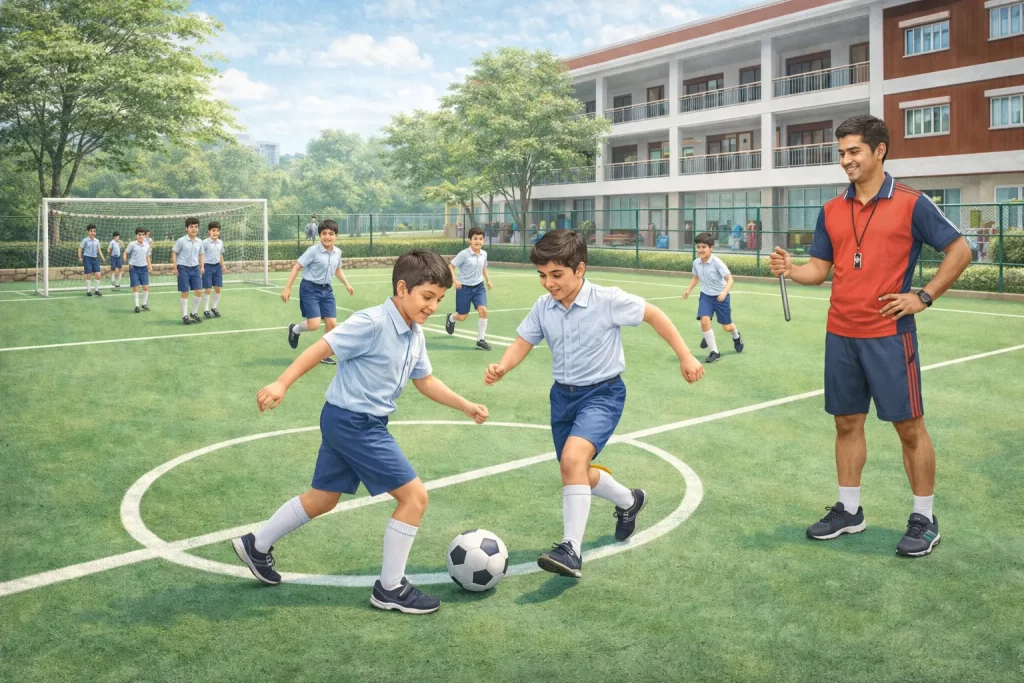
Kids’ football court

Chess Club
Structured Academic Framework (Kindergarten to Grade 12)
Jawahar Global Academy follows the CBSE curriculum with a structured implementation model, starting from Kindergarten
Early Years (Kindergarten to Grade 5)
Middle School (Grades 6–8)
Secondary & Senior Secondary (Grades 9–12)
Internal Assessment Transparency
Parents frequently misunderstand the internal marks allocation. At Jawahar Global Academy, internal evaluation follows documented CBSE internal assessment guidelines.
These include:
- Periodic Tests
- Multiple Assessments
- Subject Enrichment Activities
- Portfolio and Notebook Reviews
- Speaking & Listening Activities
Clear communication ensures parents understand evaluation criteria rather than assuming arbitrary grading.
Student-Centric Learning Environment
Modern CBSE schooling requires balance.
The educational philosophy emphasizes
- Leadership skills
- Ethical grounding
- Communication clarity
- Collaborative learning
- Structured discipline
The aim is not only academic scores but holistic development.
Safety & Governance
Under the 2026 core update environment, transparency is critical.
The campus includes:
- CCTV-monitored premises
- Supervised entry and exit systems
- Age-appropriate classroom furniture
- Sanitised learning spaces
- Staff supervision during dispersal
Safety is operational, not promotional.
Transition Continuity to Higher Education
Students progressing through this system benefit from:
- Familiar evaluation structure
- Board exam familiarity
- Subject stream clarity
- Career guidance frameworks
Parents comparing with institutions often listed among the best CBSE school categories evaluate long-term continuity more than short-term marketing.
Parent Communication Systems
Clear parent-school communication includes:
- Structured PTMs
- Term-wise performance reports
- Behavioural observation feedback
- Transparent academic calendars
Open communication reduces uncertainty and builds long-term trust.
International Sports Training & Academy Collaboration
Jawahar Global Academy believes that structured sports education must go beyond recreational activity. The Saligramam campus offers specialized coaching support designed to prepare students for district, state, national, and international-level participation.
The school facilitates structured training in:
- Cricket with professional coaching modules
- Football training aligned with competitive standards
- Volleyball skill development programs
- Advanced athletics conditioning
- Tournament-oriented practice schedules
Through structured exposure and academy-level training methodology, students are encouraged to participate in competitive circuits that extend beyond inter-school events.
The goal is not casual play, but performance development.
Individual Coaching Programs: Chess & Carrom Excellence
Recognizing that individual sports demand focused attention and strategic development, the campus offers specialized coaching in:
- Chess with tactical and analytical training
- Carrom with competitive skill enhancement
These programs emphasize:
- Strategic Thinking
- Concentration Development
- Competitive Temperament
- Tournament Preparation
Students showing aptitude are guided toward structured competition pathways at district and state levels.
Safe & GPS-Enabled School Transport
Student safety extends beyond the campus.
Jawahar Global Academy provides school bus facilities equipped with GPS tracking systems to ensure:
- Real-time route monitoring
- Safer commute management
- Parental visibility and reassurance
- Structured pickup and drop-off supervision
Transport management follows organized scheduling and monitored movement protocols to ensure discipline and safety during travel.
Why Parents Consider Jawahar Global Academy
Parents in Saligramam and surrounding areas often evaluate:
- Academic consistency
- Faculty stability
- Safety systems
- Infrastructure functionality
- Institutional legacy
The Saligramam campus integrates these elements into a structured academic framework informed by decades of experience.
Our Legacy of Distinguished Alumni

A school’s strength is not measured only by its infrastructure or examination results. It is reflected in the journeys of its students.
Jawahar Vidyalaya, established in 1966 at Ashok Nagar, has shaped generations of learners who have gone on to contribute meaningfully in technology, public service, entrepreneurship, arts, and academia. One of the most widely recognized alumni is Sundar Pichai, who completed part of his early schooling at Jawahar Vidyalaya, Ashok Nagar.
His journey from a Chennai classroom to leading one of the world’s largest technology companies is often cited as an example of how strong foundational education, disciplined academic systems, and value-based schooling create long-term impact.
However, success stories are not limited to global CEOs. Over the decades, alumni from Jawahar Vidyalaya have excelled as engineers, doctors, civil servants, legal professionals, researchers, and business leaders across India and abroad.
What makes this legacy meaningful is continuity.
Jawahar Global Academy in Saligramam carries forward the same academic philosophy, structured learning environment, and emphasis on intellectual curiosity that defined the Ashok Nagar campus for decades.
Students who walk into our classrooms today become part of an educational lineage built on:
• Strong academic discipline
• Ethical grounding
• Analytical thinking
• Confidence in communication
• Long-term growth orientation
Alumni success is never accidental. It grows from consistent teaching standards, structured assessment systems, and a culture that encourages independent thinking.
Parents who are evaluating the best CBSE school in Saligramam often ask about long-term outcomes. The most honest answer lies in the lives shaped over generations.
Frequently Asked Questions
1. What are the exams in CBSE in one year?
In a typical CBSE academic year, students usually have:
- Periodic Tests (2–3 times a year)
- Half-Yearly / Mid-Term Exams
- Annual Examination
- For Classes 10 and 12: CBSE Board (Public) Examination
Schools may also conduct pre-board exams for Classes 10 and 12.
2. CBSE public exam when came?
CBSE Board (Public) Exams for Classes 10 and 12 are usually conducted between February and April every year. The detailed timetable is released by CBSE on its official website.
3. Do CBSE schools give training for NEET kind of exams?
Many CBSE schools focus on strong conceptual learning in Physics, Chemistry, Biology, and Mathematics, which supports NEET and JEE preparation. However, NEET coaching is separate from the CBSE curriculum. Some schools provide foundation-level guidance, but full coaching is usually handled by specialized institutes.
4. How much campus capacity for Jawahar Global Academy in Saligramam?
Jawahar Global Academy, Saligramam campus is built on approximately 3 acres of land, designed to support academic, sports, and co-curricular development.
5. Which celebrity studied in Jawahar Global Academy / Jawahar Vidyalaya?
Sundar Pichai (Google CEO) completed part of his early schooling at Jawahar Vidyalaya, Ashok Nagar branch. He is a notable alumnus of Jawahar Vidyalaya.
6. Internal exams and normal exams mark and pass or fail explain
For Classes 9 and 10:
- 80 marks – Board Exam
- 20 marks – Internal Assessment
Students must secure at least 33% marks in each subject (combined internal and external) to pass.
Internal exams help in continuous assessment, while board exams are final public examinations.
7. From which places can students come to Jawahar Global Academy?
Students commonly come from nearby areas such as:
- Saligramam
- Vadapalani
- Porur
- Valasaravakkam
- Virugambakkam
- Ramapuram
- Chinmaya Nagar
- KK Nagar
- Ashok Nagar
Transport facilities support surrounding residential zones.
8. What does CBSE stand for?
CBSE stands for the Central Board of Secondary Education.
9. When were CBSE schools started?
CBSE was established in 1962 as a national-level board under the Government of India.
10. Which is the first CBSE school in India?
The board evolved from earlier educational boards established in 1929. Many early central government schools, such as Kendriya Vidyalayas, were among the earliest institutions affiliated under the CBSE structure.
11. Which is the first CBSE school in Tamil Nadu?
Kendriya Vidyalaya institutions were among the earliest CBSE-affiliated schools in Tamil Nadu.
12. Best CBSE school in Chennai based on results?
The best CBSE school is generally evaluated based on:
- Consistent board results
- Academic discipline
- Infrastructure
- Faculty quality
- Student development programs
Results alone should not be the only factor in decision-making.
13. Student and teacher ratio for CBSE school
CBSE expects schools to maintain appropriate teacher-student ratios. In practice, strong academic schools usually maintain balanced classroom strength to ensure effective monitoring and doubt clarification.
14. Main government rules for CBSE school
CBSE schools must comply with:
- Registered society/trust structure
- Minimum land and infrastructure norms
- Qualified teaching staff
- Fire and safety certification
- Clean drinking water and sanitation
- Separate toilets for boys and girls
- Mandatory disclosure on school website
Proper internal assessment documentation
15. CBSE Class 10 total marks
For most major subjects in Class 10:
100 marks per subject
- 80 marks – Board Exam
- 20 marks – Internal Assessment
16. CBSE Class 12 total marks
For Class 12:
Most subjects carry 100 marks
- 80 marks – Board Exam
- 20 marks – Practical/Internal (varies by subject)
Some subjects may have different practical mark distributions depending on subject type.
17. Pass mark for CBSE public exams for both 10 and 12
Students must secure:
- Minimum 33% marks in each subject
- This includes both theory and practical components separately (where applicable)
18. What is the age limit to join CBSE school for a kid?
Typical admission procedure includes:
- Enquiry or application form submission
- Age eligibility verification
- Submission of required documents (birth certificate, address proof, transfer certificate if applicable)
- Interaction or assessment (depending on class level)
- Confirmation of admission after approval
Admission timelines usually run from November to February for the next academic year.
19. What is the admission procedure to join a CBSE school?
Typical admission procedure includes:
- Enquiry or application form submission
- Age eligibility verification
- Submission of required documents (birth certificate, address proof, transfer certificate if applicable)
- Interaction or assessment (depending on class level)
- Confirmation of admission after approval
Admission timelines usually run from November to February for the next academic year.
20. How does the school prepare students for board exams?
Through syllabus mapping, revision cycles, periodic assessments, and pre-board simulation systems.